
What You’ll Need
- Patience and understanding of age-related changes
- Veterinary consultation for any physical limitations
- Adjusted expectations for your senior dog
- Positive attitude and consistency
Why Maintaining Training Matters as Dogs Age
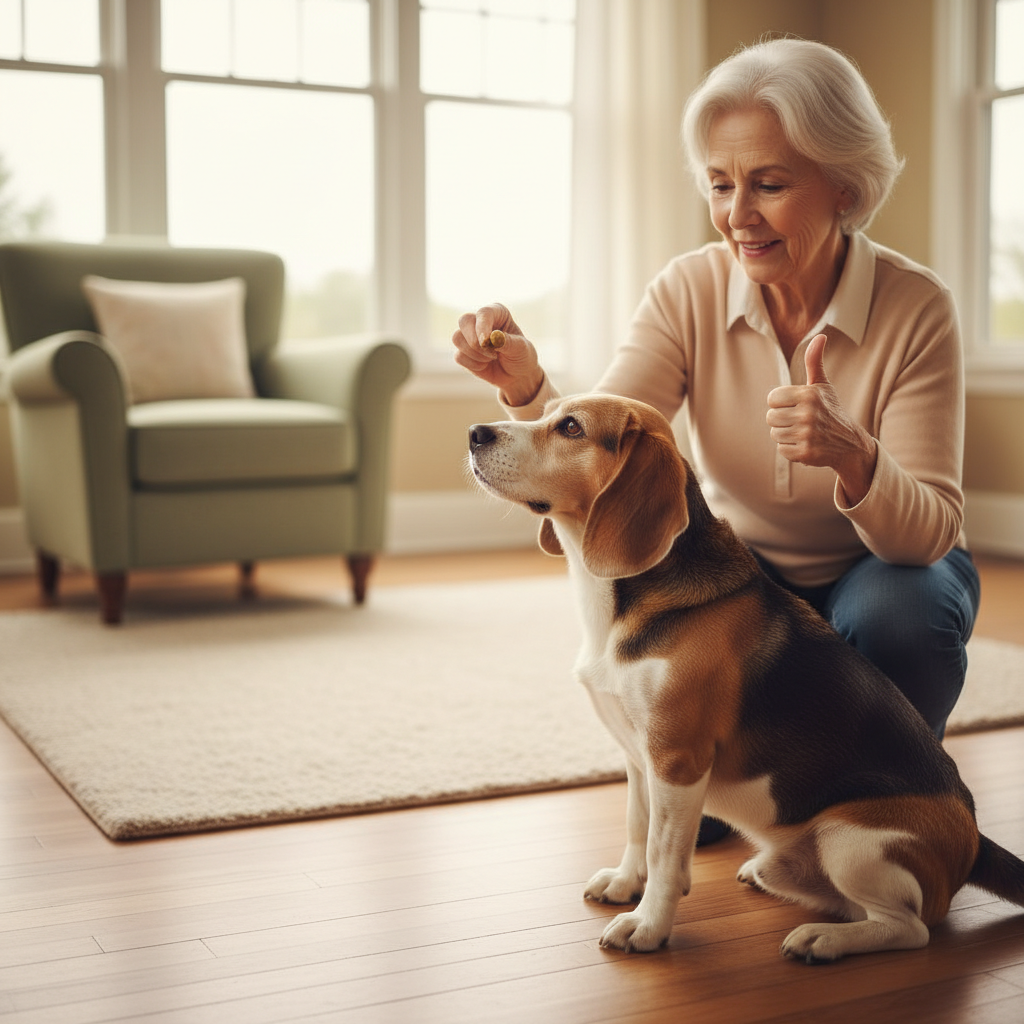
Training isn’t just for puppies — it’s a lifelong journey that should continue into your dog’s golden years. While senior dogs may face physical limitations and cognitive changes, maintaining training provides mental stimulation, reinforces your bond, and helps manage age-related behavioral changes. A well-trained senior dog is easier to care for and enjoys better quality of life.
The American Kennel Club and veterinary behaviorists emphasize that “you can’t teach an old dog new tricks” is a myth. Senior dogs can absolutely learn new behaviors and maintain existing ones. Training also helps identify cognitive changes early, allowing for veterinary intervention when needed.
Step-by-Step: How to Maintain Training as Your Dog Ages
Step 1: Adapt to Physical Changes
As dogs age, they may develop arthritis, hearing loss, vision impairment, or reduced mobility. Adjust your training accordingly:
- Replace long sits with shorter durations
- Use hand signals if hearing declines
- Avoid stairs or slippery surfaces
- Keep training sessions shorter but more frequent
Consult your veterinarian about your dog’s physical limitations. Some exercises may need to be modified or replaced entirely.
Step 2: Keep the Mind Active
Mental exercise is crucial for aging brains. Continue practicing known cues — this reinforces neural pathways and provides cognitive stimulation. Teach new, age-appropriate tricks that don’t strain the body: touch cues, scent games, or simple problem-solving puzzles.
Food-dispensing toys and puzzle feeders provide mental exercise even when formal training isn’t happening.
Step 3: Adjust Expectations and Be Patient
Senior dogs may respond more slowly — this isn’t stubbornness, it’s processing time. Give them extra time to respond to cues. If they seem confused, go back to basics and make things easier. Some days will be better than others.
Watch for signs of Canine Cognitive Dysfunction (dog dementia): disorientation, altered sleep cycles, house soiling, or changes in social interactions. These require veterinary evaluation.
Training Tips
- Keep sessions short and positive: 5-10 minutes is plenty for seniors
- Prioritize mental exercise: Brain games are as important as physical activity
- Be patient with responses: Senior dogs need more processing time
- Use high-value rewards: Smelly, soft treats are easier for aging teeth
- Watch for discomfort: Stop if your dog seems painful or stressed
Common Mistakes to Avoid
- Stopping training entirely: This accelerates cognitive decline
- Ignoring behavioral changes: These may signal medical issues
- Pushing too hard: Respect your dog’s physical limitations
- Expecting puppy energy: Senior dogs tire more quickly
Troubleshooting
My senior dog is forgetting trained behaviors: This can indicate cognitive decline. Consult your veterinarian. In the meantime, go back to basics with easier versions of known cues. Be patient and use high-value rewards.
My senior dog seems stiff during training: Adjust positions. Avoid sitting if it’s uncomfortable — use standing or lying down instead. Keep sessions short. Consider joint supplements or pain medication per your vet’s recommendation.
My senior dog has started having accidents: First, rule out medical issues (UTI, kidney disease, diabetes). Then reinforce house training basics with more frequent potty breaks and close supervision. Never punish — senior accidents are usually involuntary.
When to Adjust
Continuously adapt your training as your dog ages. What worked at 5 may not work at 12. The goal shifts from perfect obedience to mental engagement, physical comfort, and maintaining your bond. Quality time together matters more than perfect performance.