
What You’ll Need
- High-value treats (small, soft, pea-sized pieces)
- A mat or designated spot for your dog
- Patience and consistency from all family members
Why Stopping Begging Matters
Begging at the table is one of the most common complaints from dog owners. What starts as an occasional sad look quickly escalates to whining, pawing, drooling, and even stealing food. Begging makes meals stressful, can lead to obesity from extra food, and may cause digestive issues from inappropriate human food.
The American Kennel Club notes that begging is a learned behavior — dogs do it because it works. Even occasional success (one family member slipping food under the table) reinforces the behavior and keeps your dog trying. Stopping begging requires absolute consistency from everyone in the household and teaching an alternative behavior.
Step-by-Step: How to Stop Begging
Step 1: Remove All Rewards for Begging
This is the most critical step: begging must never work again. Every person in your household must agree to never give food from the table, counter, or while eating. This includes “just a little piece” and “just this once” — any reinforcement keeps the behavior alive.
When your dog begs, completely ignore them. Don’t make eye contact, don’t speak to them, don’t push them away (this is attention). If necessary, use a baby gate or crate to keep your dog out of the dining area during meals.
Step 2: Teach an Incompatible Behavior
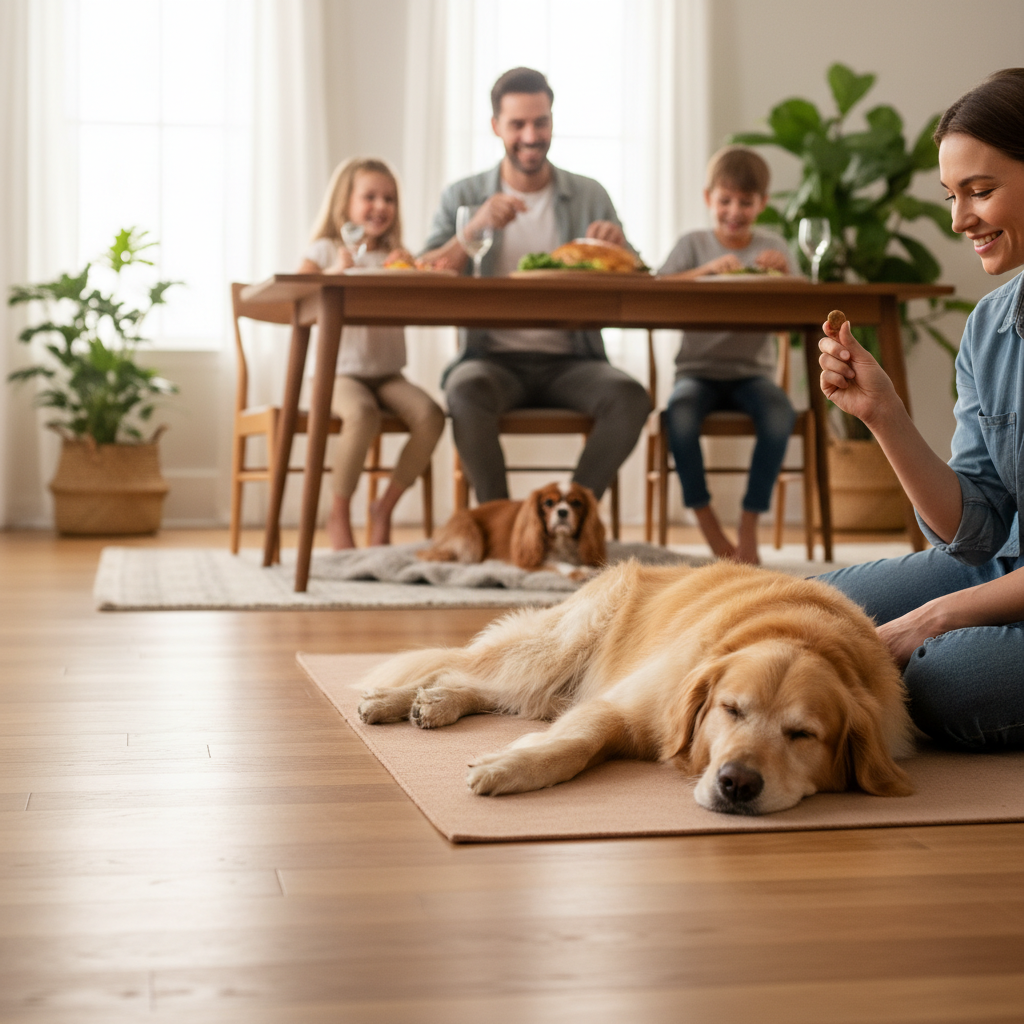
Dogs can’t beg from their mat across the room. Teach your dog to go to a designated spot (mat, bed, or crate) during meals. Start with short durations — ask for a 30-second stay on the mat, then release and reward. Gradually build to full meal lengths.
Feed your dog their own meal or give them a food-stuffed Kong on their mat during your dinner. This keeps them occupied and rewards them for staying in place.
Step 3: Reinforce the New Behavior
When your dog chooses to lie quietly away from the table — even if you didn’t cue it — quietly toss them a treat. This reinforces that good things happen when they’re not begging. Over time, your dog will learn that staying away from the table is more rewarding than hovering.
Training Tips
- Management first: Use gates or crates during training
- Feed your dog before you eat: A full dog begs less
- Provide entertainment: Food-stuffed toys keep dogs busy during meals
- Train all family members: One slip-up reinforces the behavior
- Reward quietly: Don’t make a big production that excites your dog
Common Mistakes to Avoid
- Inconsistent enforcement: If begging works sometimes, it continues
- Giving “just a taste”: Even small reinforcements maintain the behavior
- Feeding from the table during holidays: Guests need to know the rules too
- Getting angry at your dog: This is a human-created problem, not the dog’s fault
Troubleshooting
My dog stares at me while I eat: This is less obtrusive than pawing or whining. Ignore it completely. With consistency, the staring will decrease over time.
My dog begs from guests: Brief guests on the rules. Manage with a leash or gate if necessary. Some dogs are more persistent with visitors.
My dog was doing well but started begging again: Someone is probably feeding them. Have a family meeting. Check that houseguests aren’t slipping food. Go back to management (crating during meals) until the behavior extinguishes again.
When to Move On
Your dog has stopped begging when they stay on their mat or in another room during meals without being cued, or at minimum, stay away from the table without whining or pawing. Occasional hopeful looks are normal — completely ignoring them will extinguish even these.