
What You’ll Need
- A designated potty area (outdoor spot or puppy pads)
- High-value treats for potty success
- An enzymatic cleaner for accidents
- A crate or confinement area
- Patience and consistency
Why Potty Training Matters
Potty training is one of the first and most important skills you’ll teach your puppy (or adult dog). Success means a cleaner home, less frustration, and a stronger bond with your dog. Failure leads to ongoing messes, damaged floors and furniture, and often results in dogs being surrendered to shelters.
The American Kennel Club emphasizes that potty training is about management and prevention, not punishment. Dogs naturally avoid soiling their sleeping area, which is why crate training accelerates potty training. The goal is teaching your dog where you want them to go and preventing accidents everywhere else until the habit is formed.
Step-by-Step: How to Potty Train Your Puppy
Step 1: Establish a Schedule
Puppies need frequent potty breaks: first thing in the morning, after meals, after naps, after play, and before bed. A general rule: puppies can hold their bladder approximately one hour for every month of age (a 2-month-old puppy needs breaks every 2 hours). Set alarms if necessary — preventing accidents is key.
Take your puppy to the same spot each time. The scent will prompt them to go. Use a consistent cue like “go potty” while they eliminate.
Step 2: Reward Success Generously
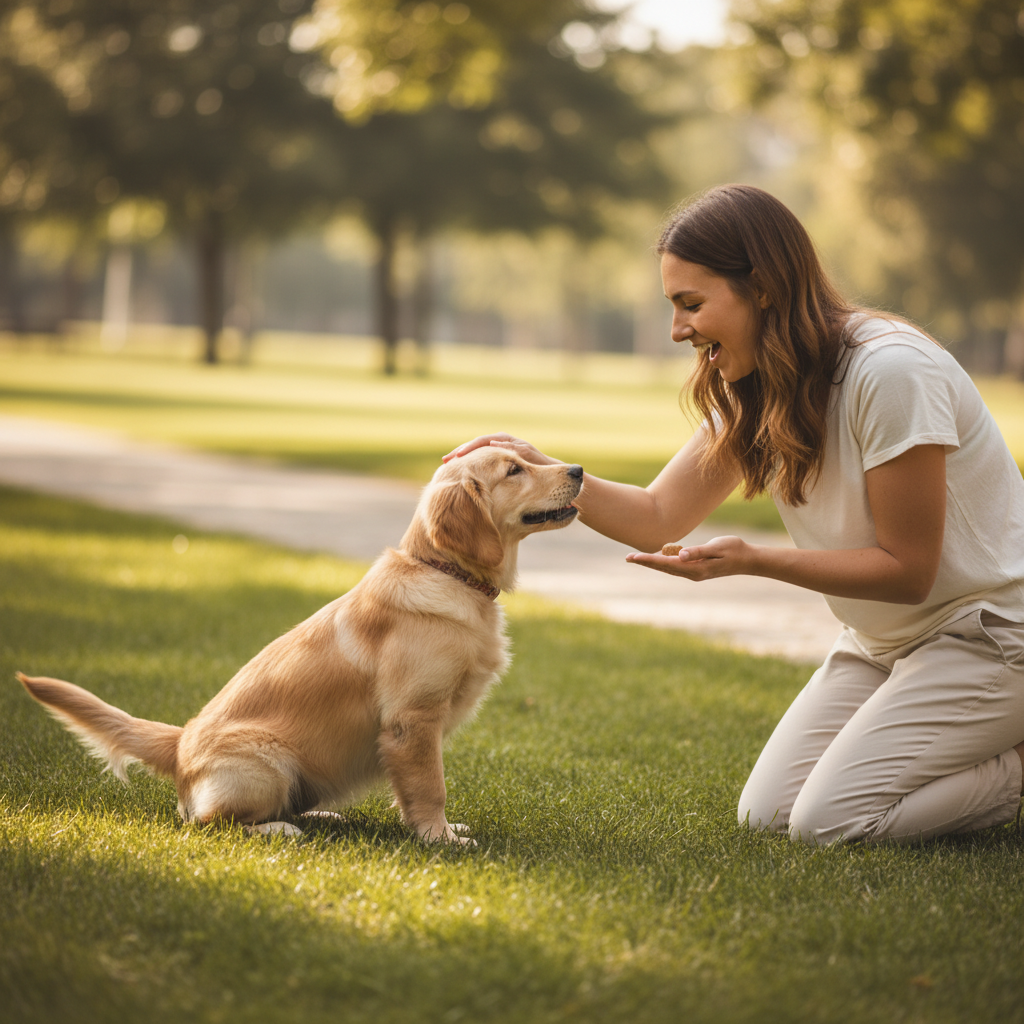
The moment your puppy finishes eliminating in the right spot, celebrate! High-value treats, enthusiastic praise, and brief play make potty outside the best thing ever. Timing matters — reward within 1-2 seconds of finishing, or your puppy won’t make the connection.
Wait until they’re completely finished before rewarding — interrupting mid-stream creates anxiety.
Step 3: Supervise and Confine
When you can’t actively supervise, your puppy should be in their crate (appropriately sized — just big enough to stand, turn, and lie down) or a small puppy-proofed area. Dogs naturally avoid soiling their sleeping space, so this prevents accidents and teaches bladder control.
When out of the crate, watch your puppy constantly. Signs they need to go: sniffing, circling, whining, or heading toward the door. If you see these signs, rush them to the potty spot immediately.
Training Tips
- Clean accidents thoroughly: Enzymatic cleaners eliminate odor that attracts repeat accidents
- Never punish accidents: This creates fear and hiding, not understanding
- Supervise constantly: If you’re not watching, they’re in the crate
- Be patient with overnight: Young puppies can’t hold it all night
- Use a potty log: Track when they go to identify patterns
Common Mistakes to Avoid
- Punishing accidents: This teaches your dog to hide from you when they need to go
- Giving too much freedom too soon: Supervision prevents mistakes
- Inconsistent schedules: Puppies thrive on routine
- Ignoring signals: Learn your puppy’s “I need to go” behavior
Troubleshooting
My puppy has frequent accidents: You’re not taking them out often enough. Increase frequency. Supervise more carefully. Ensure the crate is appropriately sized (not too big).
My puppy goes outside then has an accident inside: You’re not staying outside long enough. Some puppies need 10-15 minutes to fully empty. Reward, then give a few more minutes before coming inside.
My puppy was doing well but regressed: This is normal during adolescence. Go back to basics — more frequent trips, closer supervision. Medical issues can also cause regression — consult your vet.
When to Move On
Your puppy is potty trained when they consistently signal their needs (going to the door, ringing bells) or holding it until scheduled breaks, with minimal accidents for several weeks. This typically takes 4-6 months, though some puppies take longer. Continue the schedule until you’re confident.